
Designing a Slipway for Your Waterfront Property
What every waterfront homeowner should consider before building or replacing a private slipway
Buying a waterfront property is often about one thing.
Making the most of the water.
Whether that's heading out on the boat on a summer evening, launching a paddleboard with the family or simply enjoying easier access to the shoreline, the right infrastructure makes a huge difference.
The problem is that many properties weren't designed with today's expectations in mind.
We've seen timber slipways that have become slippery and unstable, ageing structures held together with temporary repairs and access that simply doesn't feel safe anymore. In many cases, homeowners stop using them altogether.
A new slipway isn't just about replacing what's already there. It's about creating something that's safe, built to last and feels like it belongs with the property.
"The best projects don't start with a drawing. They start with understanding how the owner wants to enjoy the water."
Glynn Melhuish, Director
Every waterfront tells a different story
One of the first things we tell clients is that there isn't a standard answer.
A sheltered estuary behaves very differently to an exposed stretch of coastline. The tides are different. The shoreline is different. Even two neighbouring properties can have completely different ground conditions.
That's why we don't believe in trying to make one design fit every site.
Instead, we spend time understanding the property, how the water behaves and how the slipway will actually be used. Once you understand those things, the right design usually follows.
It isn't about building a bigger slipway
It's about building the right one.
Some homeowners want somewhere practical to launch a RIB (Rigid Inflatable Boat) or fishing boat. Others are looking to create an elegant connection between the house and the water. Some simply want to replace something that's become unsafe.
Every project has different priorities.
That's why every slipway we build is designed around the individual property rather than adapted from an off the shelf product.
It's a slower way of working, but it nearly always produces a better result.
"No two clients are the same, so it wouldn't make much sense to build every slipway the same either."
Glynn Melhuish, Director
The materials matter more than most people realise
One of the biggest mistakes we come across isn't poor workmanship.
It's choosing materials that simply aren't designed for life beside the sea.
Salt water, changing tides and constant exposure to the elements quickly expose weaknesses. We've visited sites where structures have shifted, timber has deteriorated far sooner than expected and fixings have corroded because the wrong materials were used from the beginning.
Choosing marine grade materials isn't about spending more money.
It's about building something properly once.
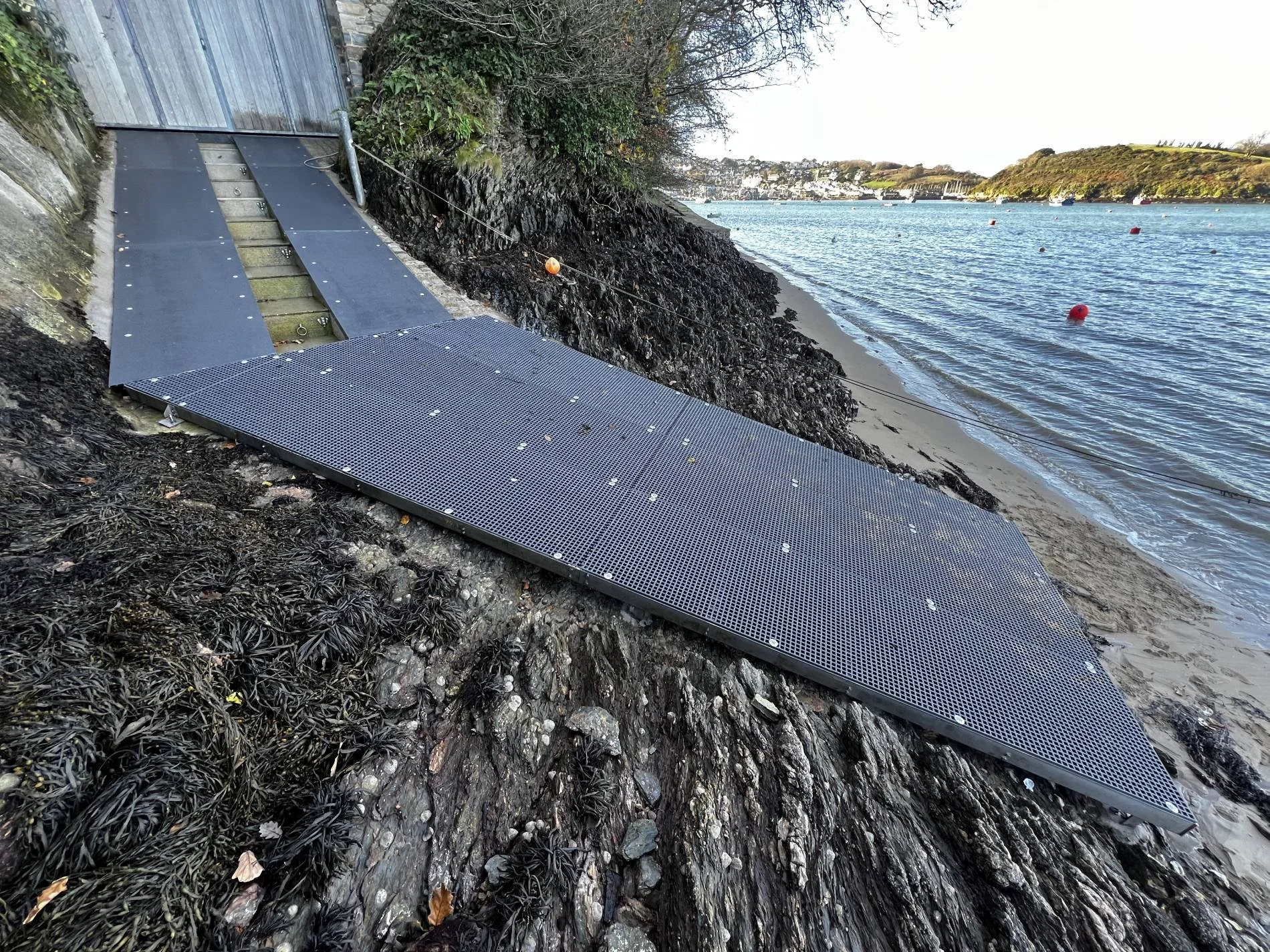
Marine grade stainless steel provides long term durability and corrosion resistance. Composite decking offers excellent grip, requires very little maintenance and continues to look good year after year.
The right materials don't just improve longevity. They also give you confidence every time you use the slipway.
Good design is often the design you hardly notice
Some of our favourite projects aren't the ones that stand out.
They're the ones that feel as though they've always been part of the property.
When we're working on high quality waterfront homes, we spend as much time thinking about appearance as we do performance. The colours, the materials and even the proportions all influence how the finished slipway sits within its surroundings.
Something as simple as choosing a darker composite decking can help the structure blend naturally with granite, stone and the local coastline.
The aim isn't to draw attention to it.
It's to create something that feels right.
"If someone notices the view before they notice the slipway, we've probably done our job well."
Glynn Melhuish, Director
The biggest difference often comes after the project is finished
One of the things clients tell us most often isn't how good the slipway looks.
It's how much more they use it.
Launching the boat becomes quicker. Friends and family feel more confident using it. Getting down to the water stops feeling like a balancing act.
The whole property starts to work differently.
That's difficult to measure, but it's one of the most rewarding parts of the job.
You don't need all the answers before getting in touch
Many people assume they need drawings, specifications or planning already in place before speaking to someone.
That's rarely the case.
In fact, some of the best conversations happen right at the beginning.
A site visit gives us the chance to understand what you're trying to achieve, look at the shoreline, discuss different options and identify anything that might influence the design before you spend money moving the project forward.
Sometimes that's enough to give you a completely different perspective on what's possible.
Frequently asked questions
-
Yes. Many of the projects we undertake involve replacing ageing or deteriorating slipways that are no longer safe or practical. Every replacement is designed around the site and how you want to use the waterfront.
-
In most cases, yes.
Every shoreline is different, and a bespoke approach allows the slipway to respond to the site rather than forcing the site to fit a standard design
-
Absolutely.
Many clients contact us before they've made any decisions. We're happy to visit your property, talk through your ideas and explain the options available.
Thinking about improving your waterfront?
Whether you're replacing an ageing slipway or planning something completely new, the first step is usually a conversation.
We'll visit your property, understand what you're trying to achieve and recommend a solution that's right for your site, your property and the way you want to enjoy the water.
There's no obligation and no sales pressure.
Just practical advice from people who've spent years working on and around the water.